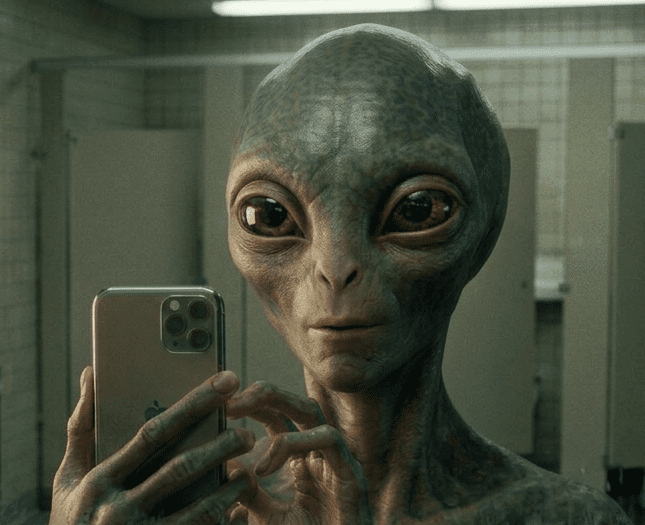
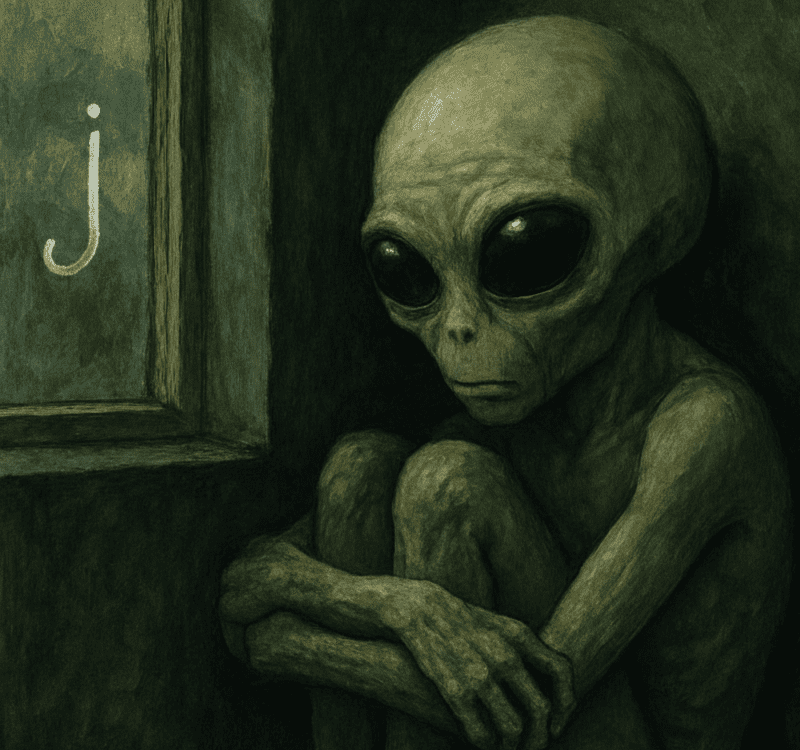
I was nine years old and sitting at a lunch table in the school cafeteria having some meaningless kid conversation with another kid when they abruptly asked me a question that would lodge itself in my brain for years.
“Why are you so strange?” he said.
Not with cruelty or mockery, but genuine confusion. Like he’d been trying hard to solve a riddle before finally giving up and just asking for the answer. I remember being completely thrown off by it. Not because it hurt my feelings, but because I had absolutely no clue what he was talking about.
“Strange? .. Huh? .. What do you mean? .. Strange how?”
I didn’t know I was strange. Didn’t know what strange even meant in this context. Strange compared to what or who? I was suddenly aware that apparently I was broadcasting from some frequency other kids were tuned into which I wasn’t even aware of, and this kid wanted to understand why. The problem was I couldn’t answer because I didn’t understand the question. Like being told you’re doing something wrong without anyone explaining how you’re doing it wrong or what the right way would even look like.
Something crystallized in that moment I’d probably been sensing but hadn’t been able to put my finger on. I was different in ways I couldn’t articulate, and other kids could see it when I couldn’t. The realization wasn’t just uncomfortable, it was existentially destabilizing. Because if I was weird and didn’t know how or why, how was I supposed to fix it? How do you solve a problem you can’t even properly define?
So I did what any desperate kid would do in that situation. I became obsessed with trying to be normal.
I began observing other kids like an anthropologist studies a foreign culture. I paid attention to how they talked and what they spoke about. How they moved through space and what made them laugh. Watched TV shows and movies and incorporated things the characters said or did, thinking if I could mimic the right behaviors, I’d crack the code. I memorized phrases and tried on different speech patterns. Pretended to like things other kids were into even when I found them boring or incomprehensible. I was running a field study on human behavior while simultaneously being a participant in it, constantly monitoring my own performance to see if I was getting it right.
The irony is that the harder I tried, the worse it got.
I was desperate for other kids to like me, so I tried making them laugh. Tried being as helpful and useful as possible. To be someone they’d want and needed to keep around. But there’s something about social desperation other kids intuit like a sixth sense. The need itself becomes visible, and visibility of need in someone who isn’t in obvious socially acceptable distress is repellent. Especially to those who are just naturally flowing through their social interactions without really thinking about it. They weren’t rejecting me because I wasn’t funny or helpful enough. They were rejecting the desperation radiating off me, the obvious performance of someone who wanted connection so badly every interaction became an audition for friendship.
They’d get bored or annoyed. Ignore me or eventually tell me to go away or ask something like “why are you still here?”. I remember being called a loser and told to fuck off many times as well as being treated in a manner so uncivil I’d “fuck off” on my own without being explicitly told to.
The phrase “wear out your welcome” comes to mind.
I’d wear out my welcome even in situations where I thought I’d been helpful or entertaining. I was auditioning for friendship using the tools of entertainment and utility, not understanding those things might make me temporarily amusing or useful but don’t actually build the kind of deeper connections I wanted. I wasn’t trying to be the class clown who occasionally made others laugh. I was trying to build actual friendships and using completely the wrong tools for the job.
Then there was the weight issue, which added another layer of complication to the social math I was trying to do. I was overweight, and a lot of kids seemed grossed out by that or at least made fun of me for it constantly or were downright cruel and abusive. I could study other kids and mimic their speech patterns perfectly, but I couldn’t performance my way out of a body they’d already decided was wrong. Some variables in the equation couldn’t be changed through behavioral modification alone, which meant the problem I was trying to solve was actually unsolvable from the start. But I didn’t understand that yet. Just kept trying different approaches. Kept refining the performance and thinking if I could get it right, everything would click into place.
It was exhausting in ways that kids who were naturally social or at least not cripplingly neurotic like me never experienced. They weren’t thinking about their performance because they weren’t performing. They were just being. I was never just being. I was always two steps removed from every interaction, monitoring my own behavior, wondering if I was coming across as normal or revealing the weirdness underneath. It was like living in a state of constant self-surveillance, and by the time I reached high school, I was close to not caring at all.
At sixteen, I dropped out. There were multiple reasons, but one of them was simply that I was tired. Tired of putting on a mask and costume every single day and of the performance that never worked. Tired of trying to solve a problem I’d finally started to recognize was unsolvable because of trying to change something fundamental about how I was wired. The cost-benefit analysis didn’t work anymore. The returns were nonexistent and the mask was too heavy.
I retreated.
I’m naturally shy anyway, but after dropping out I became even more withdrawn. Stopped trying to connect with people and instead surrendered to my obsession with hip-hop, engrossing myself in music as well as other pop culture. I escaped into that world, not necessarily because it healed me or helped me find myself or any of that therapeutic language, but because it was a place where I didn’t have to monitor my own behavior constantly. I could just consume culture that spoke to me without it requiring me to speak back in a particular way. Could just exist without performing and wondering if I was getting it right. Without seeing the boredom or annoyance creep into someone’s face as I wore out yet another welcome I didn’t even know I’d been granted.
People are performing to various degrees, I get that now. Social interaction requires some level of conscious adjustment to context and audience. But most people seem to do it so naturally they’re barely aware of it. For them, it’s not a performance, it’s calibration. For me, it was always a performance, always deliberate and exhausting. And at some point I just decided to opt out.
I know people think I’m weird. I couldn’t care less. I have a “fuck you” attitude about it now that sixteen-year-old me was just starting to develop. The whole question of “how to be a human” turned out to be not particularly interesting once I stopped trying to answer it. I guess I am human, technically, but I don’t spend any time thinking about what that means or whether I’m doing it right. I just exist on whatever frequency I exist on, and if that’s strange to other people then so be it. That’s their observation to make and wonder about if they choose, not my problem to solve.
There’s no redemptive arc here. No moment where I learned to love myself or embrace my authentic self or found my tribe or any of that bullshit. I just stopped doing the thing that didn’t work and thinking about why it didn’t work. And now I don’t think about it at all unless someone asks me why I’m so strange and then I’d probably just laugh and say one of the voices in my head told me a hilarious joke but they made me promise not to tell it to anyone because it’s only meant for us to share and no one else to ever know about.
So what’s going on with you?