
The Hospital (Part 1)
I was twelve when my father finally died, though “finally” might sound harsh to anyone who didn’t spend nearly a year watching someone deteriorate from the inside out. He’d been diagnosed with throat cancer about a year earlier, the crystal-clear result of smoking at least a pack of Kent brand cigarettes every day for roughly thirty years. The math was simple enough even for a kid to understand: one pack a day times thirty years equals a hole in your neck and a hospital bed you’ll never leave.
I remember he’d gone to the doctor because of a sore throat that wouldn’t go away and had been trying to medicate with copious cough drops, gotten a biopsy, received the cancer diagnosis, and then refused treatment for some reason. Not because he couldn’t afford it or because the doctors gave him no hope. He had insurance and medical professionals ready to develop a treatment plan. He had options. He simply said no and continued living like he’d never received the diagnosis, as if the worsening sore throat was no longer an issue that needed to be dealt with and kept smoking his cigarettes until inevitably, months later, he needed to be rushed to the emergency room after which hospice care was the only available option.
When I got home from school that day, I sensed that something was wrong or at least slightly off but not wrong or off in any glaringly obvious way. Certain relatives I’d see only now and again were there and scrambling about but not overly panicked and then my aunt approached me matter-of-factly and said we had to go to the hospital right away. My mother was already there and waiting for us. She didn’t say why. She didn’t have to.
I assumed he was about to die. Really die this time, not the slow-motion version we’d been watching for the past year. Around a week earlier, I’d spent the night at the hospital with some family members because it looked like he was finally going to pass. But it didn’t happen that time. He just kept breathing, kept existing in that eerie space between alive and dead. So when my aunt said we had to go to the hospital right away, part of me wondered how many more false alarms I’d have to sit through before this was actually over.
Still, I figured maybe this time they’d woken him up somehow, or maybe he’d regained consciousness on his own for one last conversation, and this was going to be some sort of final goodbye scene. The thought filled me with a particular type of dread that had nothing to do with loss and everything to do with social obligation.
What the hell was I supposed to say to this man?
We’d only really known each other or been in each others lives, at least from what little I’d been told and capable of piecing together and figuring out for myself, from birth to toddler and into boyhood, for perhaps three years total with most of that time accumulated over the past two years. He’d been largely absent, and when he was around, he made it clear through a thousand small gestures and absences that being a father wasn’t really his thing and that hanging out with his so-called friends during his free time was preferable to hanging around his family.
He was better at being a smoker, better at watching television, better at shooting the shit with buddies, better at basically anything that didn’t require emotional availability or interest in his kid’s life. I had no real affection for the man. I’m not sure he had any for me either. We were just two people who happened to share some DNA and for a brief time a mailing address.
During the car ride to the hospital, I was mulling over possible scenarios in my head. What do you say to a dying man you barely know? “Thanks for the genetic material”? “Sorry we never connected”? “Hope the morphine is good”? Every option felt absurd. I settled on just being quiet and hoping the situation would somehow resolve itself without requiring me to perform emotions I didn’t have.
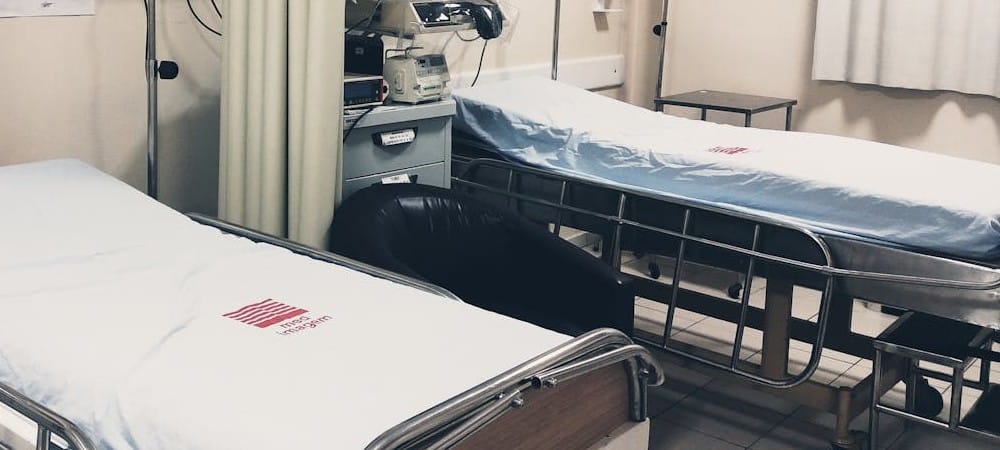
When we got to his room, I walked past his bed and mumbled something like “hey, Pa” before sitting down in one of those uncomfortable hospital chairs designed to make visitors leave quickly. The room was oddly still. After the mild chaos at home, the hurried instructions, the tense car ride, the quick walk through the hospital corridors, this felt curiously at ease. No one was rushing around. No doctors were adjusting equipment. No alarms were beeping. Just silence and the weird chemical smell of institutional cleanliness trying to cover up everything that happens in a place where people come to die.
A few minutes passed. No one said anything. I started to wonder when my father was going to wake up or be woken up or whatever was supposed to happen next in this script I didn’t understand. Finally, because the silence was becoming unbearable and I was curious in the way twelve-year-olds are about things that don’t make sense, I decided to actually look at him instead of just staring at my sneakers.
That’s when I noticed the machines. All those monitors and pumps he’d been hooked up to for months, the ones that had always glowed with little lights and made soft beeping sounds that let you know something was still happening, they were all dark. Completely powered down. Not even plugged in anymore.
I looked closely at his face. It had a waxy quality I’d never seen before, even during all those other hospital visits. And then I looked down at his neck, at the spot where there had been a tracheostomy tube, the thing that had been breathing for him when he could no longer breathe on his own. The tube was gone. In its place was just a hole, dark and empty and very clearly no longer serving any purpose.
Oh.
The realization hit me like being snapped out of a daydream by a sudden noise. I didn’t have to come up with something meaningful to say to a man on death’s door. The door had already closed. He was already gone. Had been gone, probably, before I even arrived home from school. This wasn’t a goodbye. It was a viewing. A formality. They’d brought me here to see the body because that’s what was supposed to happen I guess, but no one had bothered to explain that to me.
I felt a weird mixture of emotions, none of them grief. There was embarrassment at having said “hey, Pa” to a corpse. There was irritation at being dragged out here under false pretenses, though I understood why they’d done it that way. I might’ve refused to go to the hospital to visit a corpse although probably eventually relented but why bother going through all of that if you don’t have to. My relatives knew me well enough to say what needed to be said and nothing more to get the reaction they wanted from me at that age. There was a strange sense of anticlimax, like I’d been preparing for a test that got cancelled. And underneath all of that, if I’m being completely honest, there was something like relief.
I didn’t have to figure out how to love this man before he died or manufacture some deathbed reconciliation that neither of us wanted or would have believed in. I didn’t have to pretend we’d had something we never did. The situation had resolved itself without requiring anything from me except my physical presence in an uncomfortable chair.
Over three decades later I now recognize that room for what it was: a strange mercy. No forced intimacy, last-minute emotional demands, or pressure to feel something I didn’t feel. Just a quiet room with a body that used to be my father, and the understanding that sometimes the relationship you didn’t have is just as real as the one you did.
We left the hospital shortly after. What I remember most vividly is that hole in his neck where the tube had been. Those dark machines. And the relief of not having to say goodbye to someone I’d never really known in the first place.
Then, almost immediately, the talk began about funeral arrangements. Burial plots and headstones. People who needed to be notified. The machinery of death had begun moving, and I was about to discover that dying was only the start of a much stranger ritual.
=========================
The Funeral (Part 2)
I didn’t want to go to the funeral. I probably could have skipped it. I was twelve and the only person who could’ve forced or scared me into doing anything I didn’t want to do who wasn’t some kind of authority figure in an official setting like a school or place of business was now dead. However, I was still at that age where guilt worked on me like a charm brought about by being told of my poor mother being there without her youngest son and how would that look and what would people wonder and say, and relatives also somehow convinced me that even if I didn’t care about the mother optics, I’d come to regret not attending my dad’s funeral even though we barely knew each other. So I went through the motions despite every instinct telling me this was going to be a waste of time at best and actively miserable at worst.
The wake came first, and it was exactly as uncomfortable as I thought it would be. People kept showing up, one after another, introducing themselves with names I’d never heard before. They’d grab my hand, pull me into unwanted hugs, and deliver their condolences with the kind of practiced solemnity that comes from attending too many of these damn things. “Sorry for your loss,” they’d say, or something along those lines, as if I’d lost something instead of having something I never really had finally stop existing.
Some of these people claimed to have known my father for decades while others said they were related to me: cousins, second cousins, aunts and uncles, close family friends who might as well have been family. I had no idea who any of them were. I’d never seen them before and haven’t seen any of them since. Seriously. If that’s an exaggeration on my part it’s only a very slight one. There they were, treating his death like the grave tragedy it was supposed to be, I guess, shaking my hand and telling me how much they’d miss him while I stood there trying to figure out if I was supposed to pretend I knew who they were.
I must have shaken hands with and been hugged by dozens of people that day. The physical contact alone was exhausting. Every interaction required me to perform some version of grief or gratitude, to accept their sympathy for a loss I didn’t feel, to nod along as they shared memories of a man I barely recognized from their descriptions.
There was a guest book near the entrance where people signed their names as they arrived. At some point during the wake, I flipped through it out of curiosity or boredom or maybe just to have something to do with my hands that didn’t involve being touched by strangers. I was shocked by the number of names. Page after page of signatures. It looked like around a hundred people had shown up. A hundred people who apparently knew my father well enough to take time out of their day to mourn him. I couldn’t help wondering where all these people had been during those two years when he was alive and living in the same apartment as me or if they’d known him or been a part of his life in some way in a past I was utterly unaware of and always would be.
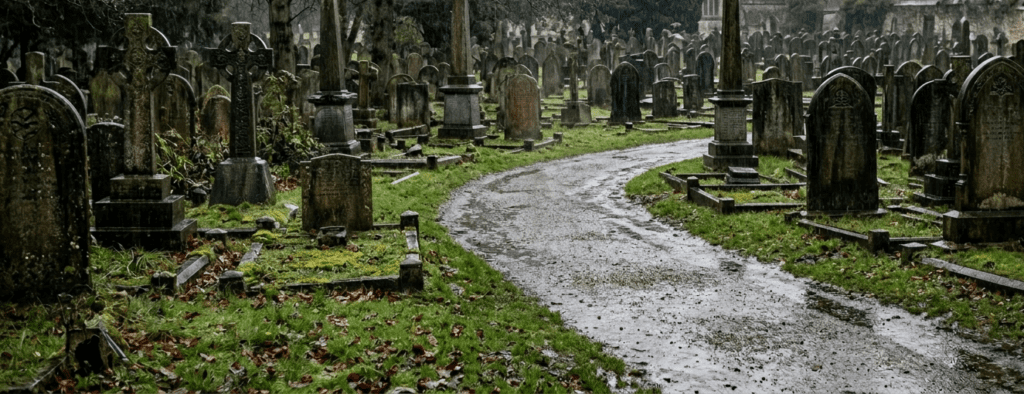
If the wake was uncomfortable, the actual funeral was something else entirely. The weather had turned miserable. Rain had been falling on and off all morning, turning the cemetery into an obstacle course of puddles and mud. Walking through it felt like navigating a minefield, trying to find solid ground while dressed in clothes that weren’t meant for this kind of terrain. Every step was preceded by a deliberate calculation of where to put which foot next without sinking into the muck or splashing myself and/or someone standing nearby.
The service itself was mercifully short due to the weather, but that didn’t make it any less bizarre. Several people got up to give brief condolences and speak about their dear friend, beloved family member, lover? (There were a couple of women there who seemed out of place and wouldn’t make direct eye contact with me or any of my father’s immediate family.) They talked about what a nice guy he was, how generous he’d been with his time and friendship, how much they’d miss him.
I stood there listening and wondered who the hell they were talking about. Nice? Generous? These aren’t the words I would have used to describe a man who’d made it abundantly clear that hanging out with his so-called friends, or being anywhere with anyone else frankly, was preferable to hanging around his family when he had any spare time.
But perhaps he was actually those things to those people. Maybe there was a version of my father that existed for others that I never got to see and would forever remain a mystery to me. Or maybe funerals just require everyone to lie a little bit about the deceased because speaking ill of them is widely regarded as bad form at a funeral at best and uncouth in general in polite society.
Anyway, after the service had officially ended with all its pomp and gravitas, and I along with everyone else were headed back to the area where all the cars were parked, I managed to step directly into a puddle of mud that I’d somehow overlooked on my careful navigation through the cemetery that whole morning. The cold, thick sludge covered my shoes completely, soaking through to my socks. I looked down at my feet, at the mess I’d made despite trying so hard to avoid it, and something in me just snapped.
I staggered uncomfortably to the car I’d been driven to the cemetery in struggling to maintain my composure. The driver was someone I didn’t know, another supposed family member or family friend or someone who was being paid, another face I’d never seen before and would never see again. Before I could even get close to the car door, he yelled at me from behind to not get in with my muddy shoes. Not asked. Not suggested. Yelled.
He’d obviously seen what happened. I stood motionless for a few seconds before a sudden rage made me spin around and yank my shoes off one by one and throw them in his direction. I then ambled toward the car in somewhat of a daze, climbed in shoeless and slammed the door as if nothing had happened, while everyone there just gawked and murmured wondering what they had just witnessed.
I’d had enough. Enough of the performance, enough of the strangers, enough of being told to care about someone I didn’t know while having to navigate both literal and figurative pitfalls. Enough of this entire farce. I wanted to go home.
My mother was mortified. I could see it in her face, that particular expression of parental horror when your child does something socially unacceptable in front of people whose opinions apparently matter. She immediately started apologizing to the driver, trying to elicit sympathy and smooth over my transgression, most likely succeeding since she was the grieving widow after all and I was the young son in mourning and I must be “going through a lot” right now.
I remember sitting in the back seat listening to all of this, feeling the car floor mats through my damp socks now flecked with bits of gravel, and then snapping at her to just get it over with. To finish apologizing so we could fucking leave. That outburst mortified her even further, which at that moment felt like her and the driver’s problem to deal with and not mine. No idea what everyone else must’ve been thinking about all this while it was happening and I didn’t remotely care.
My limit at twelve years old had finally been reached. I’d spent the day being touched by strangers, listening to eulogies about a man I didn’t recognize, performing emotions I didn’t feel, and literally trying not to step in shit. The muddy shoes were just the final indignity. After everything else, the driver yelling at me cause he was worried about his precious car interior getting muddied was the thing that broke whatever thin patience I had left.
The funeral was supposed to provide closure, I guess. That’s what funerals are meant to be for. But all it provided was confirmation that my father had an entire life I wasn’t part of, filled with people who genuinely mourned him, or did a great job of pretending to, while I stood there feeling like an imposter at my own father’s burial.
A hundred people signed that guest book. A hundred people who knew him well enough to show up and say goodbye. And me? I was the young son in supposed mourning, who’d flung his muddy shoes at someone in a cemetery causing a scene after what was meant to be a solemn occasion in a sacred place, who was fed up and just wanted to go home.